Table of Contents
Independent comparison guide — updated August 2026. This article contains affiliate links. See our affiliate disclosure for details.
Best oral probiotics 2026 can be difficult to compare, especially when different products use different probiotic strains, formats, CFU counts, and ingredients.
But what actually matters when comparing an oral probiotic?
In this guide, we’ll look at the factors that can help you compare products more carefully — including probiotic strains, CFU, delivery format, supporting ingredients, price, and manufacturing standards.
We’ll also take a closer look at ProDentim as one example of a chewable oral probiotic formula.
What Are Oral Probiotics?
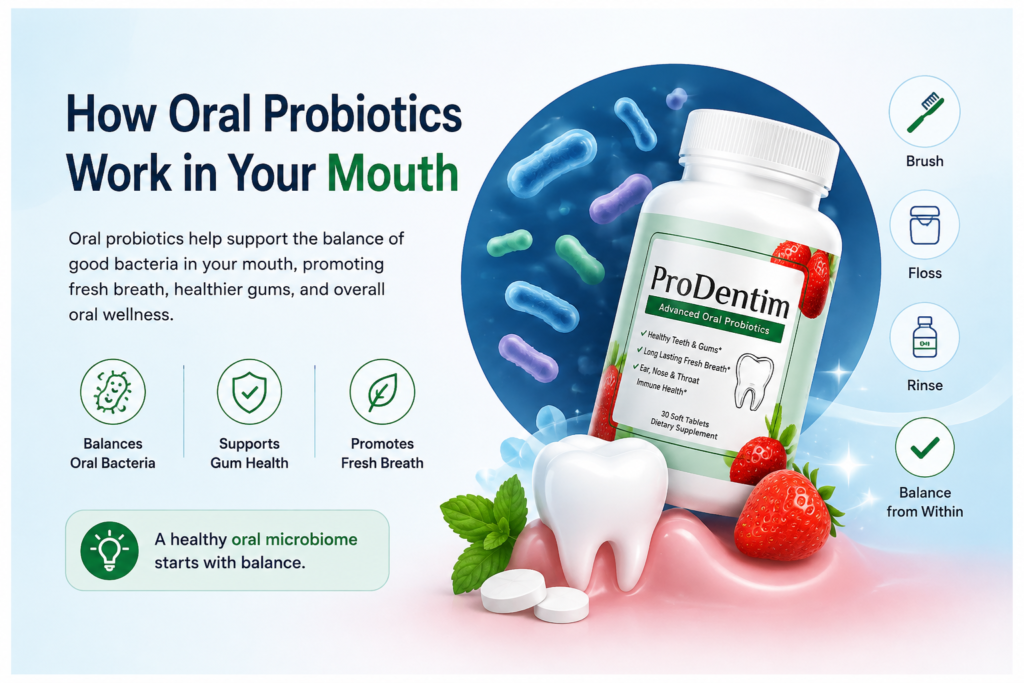
The mouth contains a complex community of microorganisms known as the oral microbiome.
Some microorganisms are naturally associated with a healthy oral environment, while changes in the balance of microorganisms can be associated with issues such as unpleasant breath and gum discomfort.
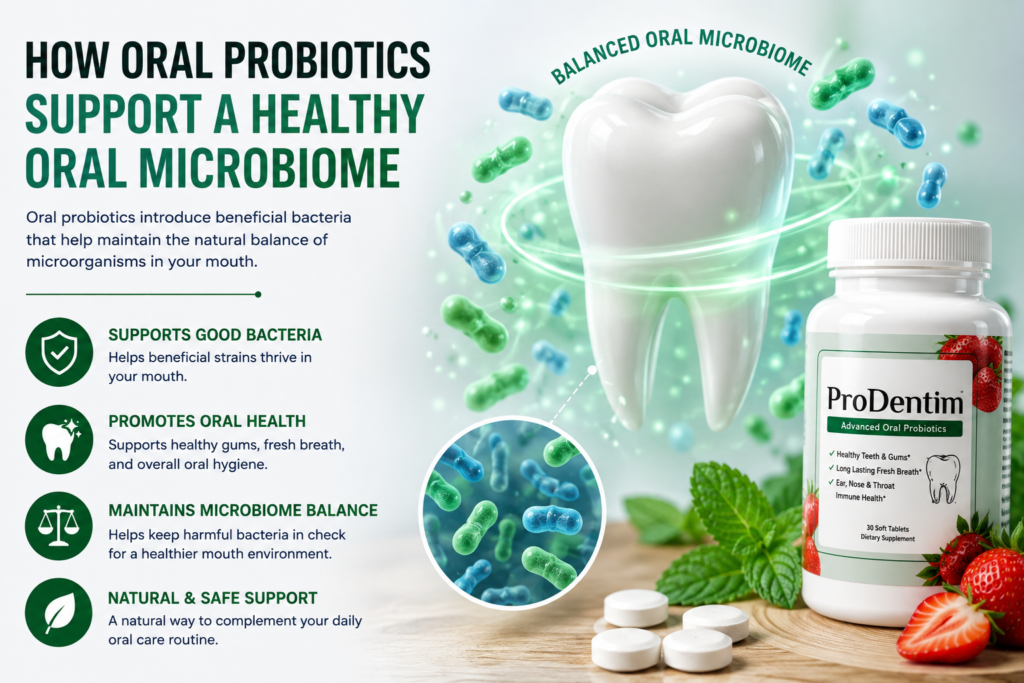
Oral probiotics are designed to introduce specific probiotic microorganisms as part of a broader oral-care routine.
They are not a replacement for brushing, flossing, professional dental care, or treatment prescribed by a dentist.
That’s an important distinction when evaluating any supplement marketed for oral health.
Why Best Oral Probiotics 2026 Are Getting Attention
Traditional oral hygiene focuses on removing plaque and unwanted buildup through brushing, flossing, and other products.
Oral probiotics take a different approach by focusing on the microorganisms themselves.
Research into the oral microbiome has increased interest in probiotic strains that may interact with the microorganisms naturally found in the mouth. However, results can vary depending on the specific strain, formulation, dosage, and individual.
That’s why comparing the actual formula is more useful than simply choosing a product because it says “probiotic” on the label.
What Should You Compare Before Buying an Oral Probiotic?
Here are five things worth checking.
1. Specific Probiotic Strains
Look for products that identify the actual strains included in the formula.
A label that simply says “probiotic blend” gives you less information than one that identifies individual strains.
For example, ProDentim’s formula lists strains including Lactobacillus paracasei, Lactobacillus reuteri, and Bifidobacterium lactis BL-04®.
Being able to identify individual strains makes it easier to research what has been studied about them.
2. CFU Per Serving
CFU stands for colony-forming units and is commonly used to describe the number of viable microorganisms in a probiotic.
However, a bigger number doesn’t automatically mean a better product.
The strains used, formulation, stability, and intended use should all be considered alongside the CFU number.
3. Delivery Format
Oral probiotics can come in different forms, including capsules, chewable tablets, and lozenges.
For products specifically intended for the oral environment, the way a product is consumed is worth considering.
A chewable or dissolving format remains in contact with the mouth during use, while a conventional capsule is generally swallowed.
4. Supporting Ingredients
Some formulas contain additional ingredients such as prebiotic fibers, flavoring ingredients, or minerals.
For example, ProDentim lists inulin, malic acid, tricalcium phosphate, and peppermint alongside its probiotic ingredients.
Don’t simply look for the longest ingredient list. Instead, check what each ingredient is intended to contribute to the formula.
5. Manufacturing Standards
Manufacturing quality matters for supplements.
When comparing products, look for information about manufacturing practices and quality standards, such as GMP compliance, where applicable.
It’s also a good idea to check the manufacturer’s current information rather than relying entirely on third-party review websites.
ProDentim vs. Other Oral Probiotics
There isn’t one oral probiotic that is automatically the best choice for everyone.
However, comparing the characteristics of different product formats can help narrow down your options.
| Feature | ProDentim | Capsule-Based Probiotic | Lozenge-Based Probiotic |
|---|---|---|---|
| Format | Chewable tablet | Swallowed capsule | Dissolving lozenge |
| Strains | Multi-strain formula | Varies | Varies |
| CFU | 3.5 billion per serving* | Varies by product | Varies by product |
| Supporting ingredients | Includes inulin and other formulation ingredients | Varies | Varies |
| Intended use | Oral probiotic | Usually general probiotic use | Oral-focused |
| Manufacturing information | Check current manufacturer information | Depends on brand | Depends on brand |
Product information can change, so check the current official label before purchasing.
What Makes a Chewable Oral Probiotic Different?
One of the main differences between oral probiotics is how they’re delivered.
A product designed to be chewed or dissolved in the mouth is specifically intended to interact with the oral environment during use.
That doesn’t automatically mean every chewable probiotic will produce better results than every capsule. Instead, the delivery format should match what you’re actually trying to accomplish.
If your primary interest is supporting the oral microbiome, an oral-focused format may be worth considering.
ProDentim Ingredients: What’s Inside?
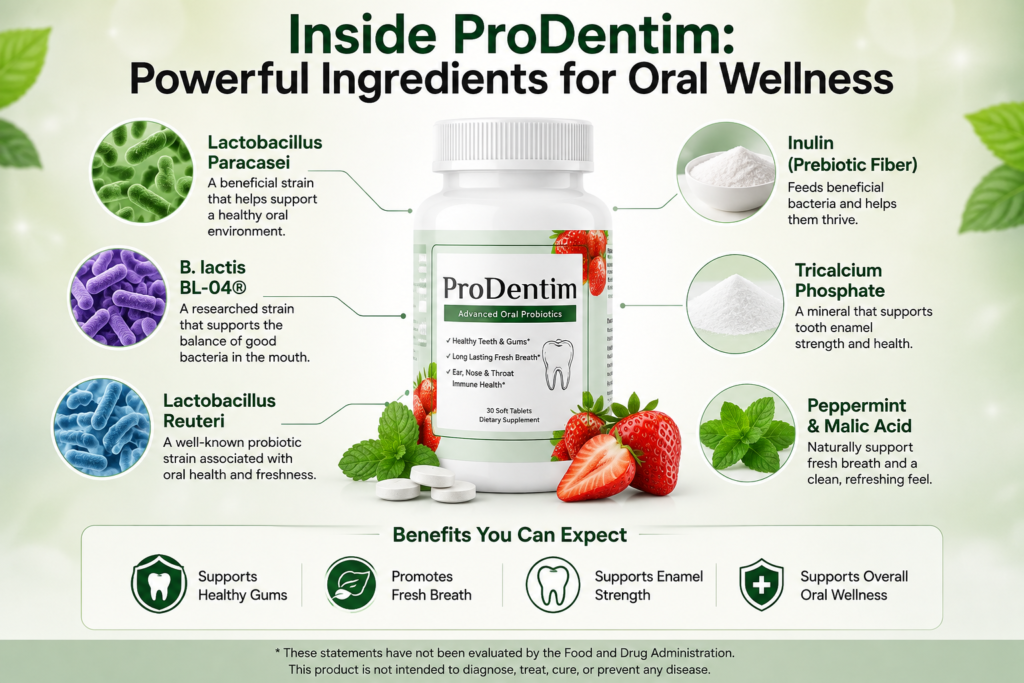
ProDentim uses a multi-ingredient formula containing probiotic strains and supporting ingredients.
Lactobacillus paracasei
Lactobacillus paracasei is a probiotic species that has been investigated in connection with the microbiome and oral health.
Lactobacillus reuteri
Lactobacillus reuteri is another probiotic species that has been studied in oral-health research.
Bifidobacterium lactis BL-04®
BL-04® is a specific strain of Bifidobacterium lactis used in probiotic formulations.
Inulin
Inulin is a type of prebiotic fiber. Prebiotics are ingredients that can serve as substrates for certain beneficial microorganisms.
Malic Acid, Tricalcium Phosphate & Peppermint
These ingredients contribute to the overall formulation, flavor, texture, or freshness experience.
As always, the best approach is to check the current product label because formulations and serving information can change.
How Much Does ProDentim Cost?
The price of supplements can vary depending on the package selected, promotions, and where the product is purchased.
For that reason, comparing only the price of one bottle isn’t always useful.
A better comparison is the approximate cost per day.
For example, if a 30-day supply costs $69, the basic calculation would be:
$69 ÷ 30 days = approximately $2.30 per day.
Multi-bottle packages may reduce the effective daily cost, but buyers should always check the current package price, shipping costs, and terms before purchasing.
Is ProDentim Worth Considering?
That depends on what you’re looking for.
If you specifically want an oral-focused probiotic in a chewable format, ProDentim is one product worth comparing with other oral probiotic options.
Its formula identifies multiple probiotic strains rather than simply using a generic “probiotic blend,” and it also includes supporting ingredients.
However, no supplement should be viewed as a guaranteed solution for dental problems.
Your decision should ultimately depend on the ingredients, format, price, your individual needs, and advice from your dental professional when appropriate.
Frequently Asked Questions
What is the best oral probiotic in 2026?
There isn’t one product that is objectively best for everyone. When comparing oral probiotics, look at the specific strains, CFU, delivery format, ingredients, manufacturing information, and price.
Is ProDentim a good oral probiotic?
ProDentim is an oral probiotic supplement with a multi-strain formula in a chewable format. Whether it is suitable for you depends on your individual needs and expectations.
Can oral probiotics replace brushing and flossing?
No. Oral probiotics should not replace basic oral hygiene. Regular brushing, flossing, dental checkups, and professional treatment when needed remain important parts of oral care.
How many CFU should an oral probiotic have?
There isn’t a single CFU number that guarantees better results. The specific strains and formulation are also important when evaluating a probiotic.
Are oral probiotics FDA approved?
Dietary supplements are not FDA-approved like prescription or over-the-counter drugs. The FDA regulates dietary supplements under applicable laws and regulations, but individual supplements are not approved for effectiveness before being marketed in the same way as drugs.
How long does an oral probiotic take to work?
There is no guaranteed timeline. Individual experiences can vary, and results depend on factors such as the product, consistency of use, and individual oral-health circumstances.
Final Verdict: Which Oral Probiotic Should You Choose?
If you’re searching for the best oral probiotics in 2026, don’t choose based on the front of the bottle alone.
Instead, compare:
- Specific probiotic strains
- CFU per serving
- Delivery format
- Supporting ingredients
- Manufacturing standards
- Cost per day
- Current product information
For someone specifically looking for a multi-strain, chewable oral probiotic, ProDentim is one option worth researching alongside alternatives.
Before purchasing, review the current ingredient list and package details from the official source.
👉 Check ProDentim’s Current Price & Packages
Check ProDentim’s official website
Disclaimer: This article is for informational purposes only and is not medical advice. Dietary supplements are not intended to diagnose, treat, cure, or prevent disease. Consult a qualified healthcare professional or dentist if you have concerns about your oral health. This article contains affiliate links, which means we may earn a commission if you make a purchase through a qualifying link, at no additional cost to you.