Table of Contents
Best Vitamins for Teeth and Gums
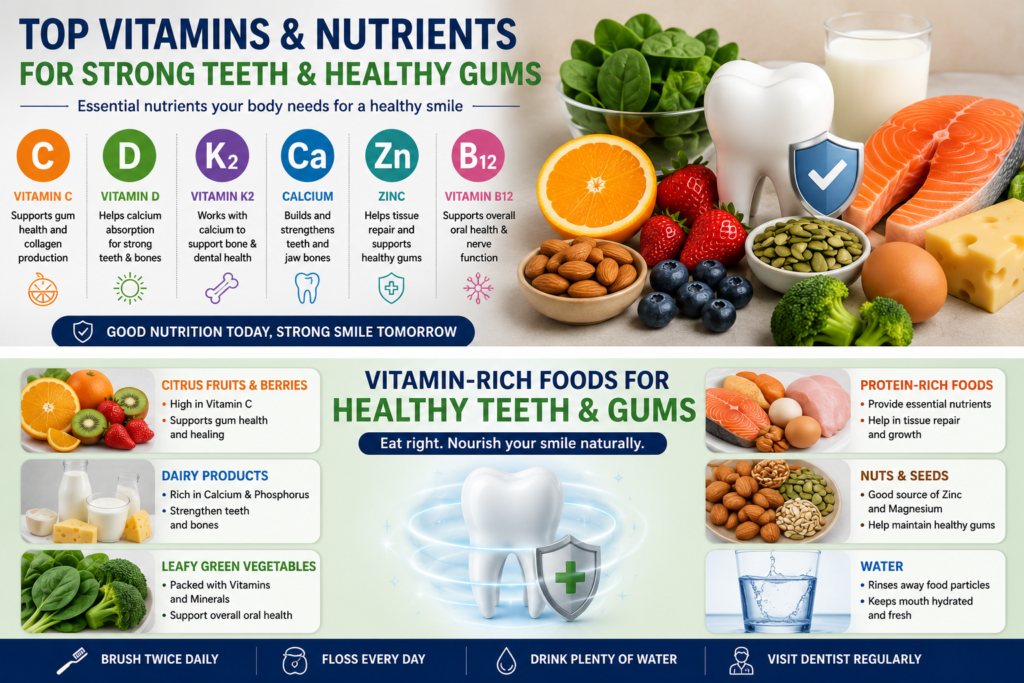
Strong teeth and healthy gums depend on much more than brushing and flossing. While good oral hygiene is essential, your body also needs the right nutrients to maintain healthy teeth, support gum tissue, and protect your smile over time. That’s why many people search for the best vitamins for teeth and gums as part of their overall oral health routine.
Your teeth and gums constantly face challenges from plaque, bacteria, acidic foods, and daily wear. Vitamins and minerals help your body repair tissues, maintain strong bones, support the immune system, and contribute to a healthy oral microbiome. Without enough of these nutrients, even a good brushing routine may not provide the support your mouth needs.
The best vitamins for teeth and gums are not a replacement for professional dental care. Instead, they help fill nutritional gaps and work alongside a balanced diet, regular dental checkups, and healthy lifestyle habits.
Whether your goal is to maintain healthier gums, support strong teeth, or improve your overall oral wellness, understanding which vitamins matter most can help you make informed choice.
What You’ll Learn in This Guide
In this article, you’ll discover:
- Why vitamins matter for oral health
- Common signs of vitamin deficiencies
- The best vitamins for teeth and gums
- Foods naturally rich in these nutrients
- Whether supplements may be helpful
- How oral probiotics fit into a healthy routine
- Tips for choosing quality supplements
- Frequently asked questions
Why Vitamins Matter for Teeth and Gums
Your mouth is one of the first places where nutritional deficiencies may become noticeable. Healthy gums, strong enamel, saliva production, and tissue repair all depend on getting enough essential vitamins and minerals.
The best vitamins for teeth and gums help support several important functions, including:
- Maintaining healthy gum tissue
- Supporting collagen production
- Strengthening teeth and jawbones
- Supporting normal immune function
- Helping maintain healthy connective tissues
- Supporting a balanced oral microbiome
When your body receives the nutrients it needs, your teeth and gums are better supported as part of your daily oral care routine.
Signs You May Not Be Getting Enough Vitamins
Many people don’t realize that poor nutrition can affect oral health. While these symptoms can have many causes, they may also be associated with inadequate intake of certain nutrients.
Some common signs include:
- Bleeding gums while brushing
- Swollen or tender gums
- Persistent bad breath
- Tooth sensitivity
- Slow healing after dental procedures
- Frequent mouth sores
- Weak or brittle teeth
- Dry mouth
These symptoms should always be discussed with a qualified dentist or healthcare professional. Alongside proper treatment, improving your nutrition and considering the best vitamins for teeth and gums may support your overall oral health.
What Causes Vitamin Deficiencies?
Vitamin deficiencies don’t always result from poor eating habits. Several factors can reduce your body’s ability to absorb or utilize nutrients effectively. The NIH Office of Dietary Supplements provides evidence-based information about vitamins, minerals, and dietary supplements.
1. Poor Diet
A diet high in processed foods and low in fruits, vegetables, dairy products, and lean proteins may provide fewer essential nutrients.
2. Aging
As we age, the body’s ability to absorb certain vitamins may decline, making it more important to focus on nutrition.
3. Digestive Conditions
Some digestive disorders can reduce the absorption of vitamins and minerals.
4. Lifestyle Habits
Smoking, excessive alcohol consumption, chronic stress, and poor sleep may all influence overall health, including oral health.
5. Certain Medications
Some medications may interfere with nutrient absorption. If you’re taking long-term medications, discuss nutritional needs with your healthcare provider.
Can Vitamins Improve Oral Health?
This is one of the most frequently asked questions.
The answer is yes—but with realistic expectations.
The best vitamins for teeth and gums support your body’s normal functions. They are not medicines and should not be viewed as treatments for cavities, gum disease, or other dental conditions.
Instead, vitamins help support:
- Normal collagen production
- Healthy connective tissue
- Strong bones and teeth
- Healthy immune responses
- Antioxidant protection
- Overall oral wellness
When combined with brushing, flossing, routine dental visits, and a balanced diet, the best vitamins for teeth and gums can become part of a long-term oral health strategy.
Nutrition vs. Oral Hygiene: Which Matters More?
Many people assume that brushing alone is enough to maintain healthy teeth.
In reality, oral health depends on both external care and internal nutrition.
Think of it this way:
- Brushing helps remove plaque from the surface of your teeth.
- Flossing cleans areas your toothbrush can’t reach.
- A balanced diet provides the nutrients your gums, teeth, and jawbones need to stay healthy.
Without proper nutrition, your body may struggle to maintain healthy oral tissues over time.
This is why dentists often recommend a balanced diet alongside consistent oral hygiene practices.
Why More People Are Looking Beyond Toothpaste
Traditional oral care focuses on cleaning the teeth.
Today, many people are also paying attention to nutrition and the oral microbiome.
In addition to vitamins and minerals, oral probiotics have become increasingly popular because they are designed to support beneficial bacteria naturally found in the mouth.
Rather than replacing brushing or flossing, oral probiotics complement a complete oral care routine.
Many people researching the best vitamins for teeth and gums also explore oral probiotic supplements as part of a broader approach to oral wellness.
What Makes This Guide Different?
The internet is full of articles that simply list vitamins without explaining why they matter.
This guide takes a more practical approach by covering:
- What each vitamin does
- How it supports teeth and gums
- Natural food sources
- Supplement considerations
- Lifestyle habits that improve oral health
- The role of oral probiotics
- Scientific, evidence-based information without exaggerated claims
Our goal is to help you understand how nutrition supports oral health so you can make informed decisions.
Top 10 Best Vitamins for Teeth and Gums
When it comes to maintaining a healthy smile, vitamins play an important supporting role. Your teeth and gums need a variety of nutrients to maintain strong structures, healthy tissues, and normal immune function.
The best vitamins for teeth and gums are not limited to one specific nutrient. Instead, oral health depends on a combination of vitamins and minerals working together.
Let’s explore the most important nutrients that support healthy teeth and gums.
1. Vitamin C — One of the Most Important Vitamins for Healthy Gums
Vitamin C is often considered one of the best vitamins for teeth and gums because it supports collagen production.
Collagen is a major protein that helps maintain the structure of connective tissues, including gum tissue.
When your body receives enough Vitamin C, it can better support:
- Healthy gum tissue
- Normal healing processes
- Strong connective tissues
- Antioxidant protection
Foods Rich in Vitamin C:
- Oranges
- Strawberries
- Kiwi
- Guava
- Bell peppers
- Broccoli
People who do not consume enough Vitamin C-rich foods may consider supplementation as part of a complete oral wellness routine.
2. Vitamin D — Supports Strong Teeth and Jaw Health
Vitamin D is another important nutrient among the best vitamins for teeth and gums because it helps the body absorb calcium.
Calcium is essential for maintaining strong teeth and bones, including the jawbone that supports your teeth.
Benefits of Vitamin D:
- Helps calcium absorption
- Supports strong teeth
- Supports bone health
- Contributes to normal immune function
Natural Sources:
- Sun exposure
- Salmon
- Eggs
- Fortified dairy products
- Mushrooms
A balanced Vitamin D level supports overall wellness and plays an important role in maintaining a healthy smile.
3. Vitamin A — Supports Saliva Production and Oral Tissues
Vitamin A is sometimes overlooked when discussing the best vitamins for teeth and gums, but it plays an important role in maintaining healthy tissues.
Saliva is essential because it helps:
- Wash away food particles
- Protect teeth
- Maintain a healthy mouth environment
Vitamin A Sources:
- Carrots
- Sweet potatoes
- Spinach
- Eggs
- Dairy products
Adequate Vitamin A intake supports normal oral tissue maintenance.
4. Vitamin K2 — Works With Calcium for Dental Support
Vitamin K2 is becoming increasingly discussed in nutrition and dental wellness because it works together with Vitamin D and calcium.
Together, these nutrients support normal bone metabolism.
Potential Benefits:
- Supports healthy bones
- Helps calcium utilization
- Supports dental wellness
Foods containing Vitamin K2 include:
- Fermented foods
- Certain cheeses
- Eggs
- Meat products
5. Vitamin B12 — Supports Overall Oral Wellness
Vitamin B12 is important for many body functions, including maintaining healthy cells.
Low levels of Vitamin B12 may be associated with certain oral concerns.
Benefits:
- Supports healthy cells
- Helps normal nerve function
- Supports overall wellness
Sources:
- Fish
- Meat
- Eggs
- Dairy products
- Fortified foods
People following vegetarian or vegan diets may need to pay special attention to Vitamin B12 intake.
6. Calcium — Essential Mineral for Strong Teeth
Although calcium is a mineral rather than a vitamin, it is one of the most important nutrients for dental health.
Calcium helps maintain:
- Strong tooth structure
- Healthy jawbones
- Normal bone strength
Calcium-Rich Foods:
- Milk
- Yogurt
- Cheese
- Almonds
- Leafy greens
Many formulas containing the best vitamins for teeth and gums also include calcium because of its importance for teeth and bone support.
7. Magnesium — Supports Calcium Balance
Magnesium works together with calcium and Vitamin D to support healthy bones.
It is another important nutrient often included in comprehensive oral health formulas.
Benefits:
- Supports bone health
- Helps maintain normal body functions
- Supports nutrient balance
Food Sources:
- Pumpkin seeds
- Almonds
- Spinach
- Dark chocolate
- Beans
8. Zinc — Supports Healthy Gum Tissue
Zinc contributes to normal immune function and tissue maintenance.
It is commonly found in oral wellness products because it supports the body’s natural processes.
Benefits:
- Supports healthy gums
- Helps maintain oral tissues
- Supports immune health
Food Sources:
- Pumpkin seeds
- Seafood
- Chickpeas
- Nuts
Zinc is frequently included among nutrients associated with the best vitamins for teeth and gums.
9. Phosphorus — Helps Maintain Tooth Structure
Phosphorus works alongside calcium to support strong teeth and bones.
It is naturally found in many foods.
Sources:
- Fish
- Meat
- Dairy
- Eggs
- Nuts
Adequate phosphorus intake contributes to overall dental wellness.
10. Omega-3 Fatty Acids — Supporting Overall Oral Wellness
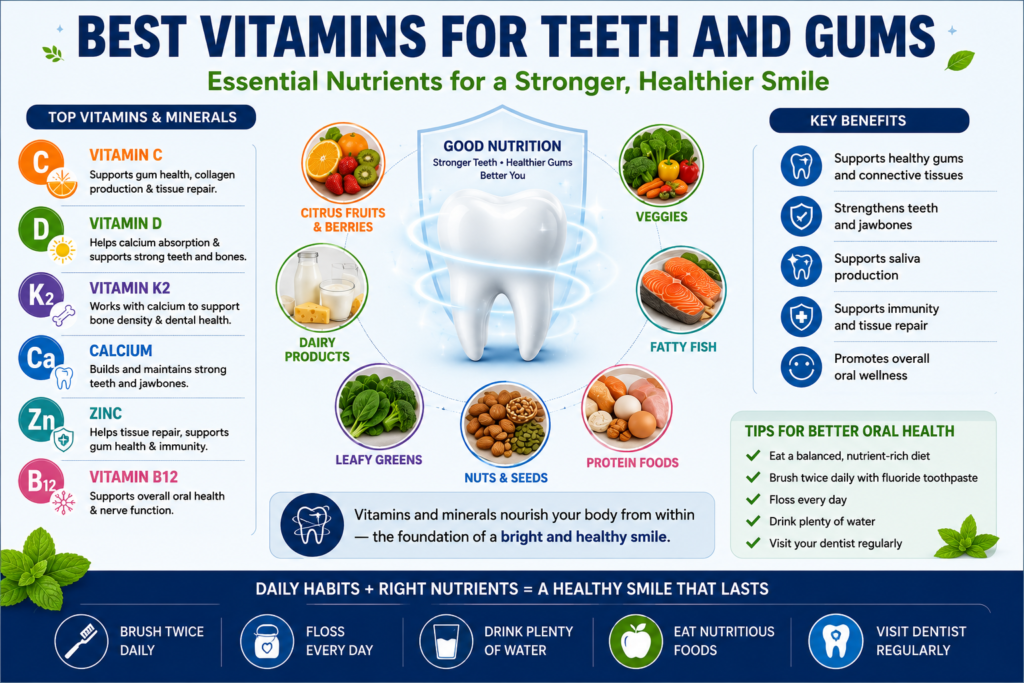
Omega-3 fatty acids are not vitamins, but they are often discussed alongside the best vitamins for teeth and gums because of their role in overall health.
Sources:
- Salmon
- Sardines
- Walnuts
- Flaxseed
- Chia seeds
Omega-3s are part of a balanced nutritional approach that supports general wellness.
Comparison Table: Best Vitamins and Nutrients for Teeth and Gums
| Nutrient | Main Role | Food Sources |
|---|---|---|
| Vitamin C | Collagen & gum tissue support | Citrus fruits, berries |
| Vitamin D | Calcium absorption | Sunlight, fish |
| Vitamin A | Oral tissue support | Carrots, spinach |
| Vitamin K2 | Bone metabolism | Fermented foods |
| Vitamin B12 | Cell support | Eggs, dairy, fish |
| Calcium | Tooth strength | Milk, yogurt |
| Magnesium | Mineral balance | Nuts, seeds |
| Zinc | Tissue maintenance | Seafood, seeds |
| Phosphorus | Tooth structure | Dairy, fish |
| Omega-3 | Overall wellness | Fish, nuts |
Can Oral Probiotics Support Teeth and Gum Health?
While vitamins and minerals provide nutritional support, another growing area of interest is the oral microbiome.
The mouth contains millions of bacteria, both beneficial and harmful. Maintaining a balanced oral microbiome is an important part of overall oral wellness.
Oral probiotics are designed to support beneficial bacteria in the mouth.
People interested in the best vitamins for teeth and gums often also explore oral probiotics because they support a different aspect of oral care.
Potential benefits of oral probiotics include:
- Supporting fresh breath
- Helping maintain oral balance
- Supporting daily gum care
- Complementing regular brushing and flossing
Products such as ProDentim are examples of oral probiotic supplements that focus on supporting oral microbiome balance.
Vitamins vs Supplements: What Should You Choose?
Many people wonder whether they should focus only on food or consider supplements.
The answer depends on individual needs.
Food First Approach
Whole foods provide:
- Multiple nutrients together
- Fiber
- Natural compounds
- Balanced nutrition
Supplement Support
Supplements may help when:
- Diet lacks certain nutrients
- Nutritional needs increase
- Specific deficiencies exist
The best vitamins for teeth and gums should complement healthy habits, not replace them.
How to Choose the Best Vitamins for Teeth and Gums
With so many supplements available, choosing the best vitamins for teeth and gums can feel confusing. Some products focus on a single nutrient, while others combine multiple vitamins, minerals, and oral health ingredients.
The right choice depends on your diet, lifestyle, and individual nutritional needs.
Here are some important factors to consider before choosing a supplement.
1. Check the Ingredient List
A quality oral health supplement should clearly explain what ingredients it contains and why they are included.
Look for nutrients commonly associated with dental wellness, such as:
- Vitamin C
- Vitamin D
- Vitamin A
- Vitamin K2
- Vitamin B12
- Calcium
- Magnesium
- Zinc
Some formulas may also include oral probiotics to support a balanced oral microbiome.
2. Avoid Unrealistic Claims
When researching the best vitamins for teeth and gums, be careful of products that promise instant results or claim to replace dental treatment.
A trustworthy supplement should have realistic messaging:
✅ Supports oral wellness
✅ Complements a healthy routine
✅ Provides nutritional support
It should not claim to:
❌ Reverse all dental problems
❌ Replace brushing and flossing
❌ Act as a treatment for gum disease
3. Consider Your Personal Needs
Different people may focus on different nutrients.
| Goal | Nutrients Commonly Considered |
|---|---|
| Gum tissue support | Vitamin C, Zinc |
| Strong teeth | Calcium, Vitamin D |
| Overall oral wellness | Vitamin A, B vitamins |
| Bone support | Calcium, Vitamin D, K2 |
| Oral microbiome support | Oral probiotics |
The best vitamins for teeth and gums are the ones that fit your overall health goals.
4. Look for Transparent Brands
Before choosing any supplement, check:
- Complete ingredient information
- Serving size
- Manufacturing details
- Customer support availability
- Clear usage instructions
Transparency helps consumers make informed decisions.
Best Foods for Strong Teeth and Healthy Gums
Before considering supplements, focus on your daily diet.
Many nutrients found in the best vitamins for teeth and gums are naturally available through whole foods.
1. Dairy Products
Milk, yogurt, and cheese provide calcium and other nutrients that support strong teeth.
Benefits:
- Supports tooth structure
- Provides calcium
- Helps maintain nutritional balance
2. Citrus Fruits and Berries
Foods rich in Vitamin C support normal collagen production.
Examples:
- Oranges
- Strawberries
- Kiwi
- Guava
3. Leafy Green Vegetables
Vegetables like spinach and kale provide vitamins and minerals important for overall wellness.
4. Nuts and Seeds
Nuts and seeds provide nutrients like:
- Magnesium
- Zinc
- Healthy fats
Examples:
- Almonds
- Pumpkin seeds
- Chia seeds
5. Fatty Fish
Fish such as salmon and sardines provide Vitamin D and Omega-3 fatty acids.
Daily Routine to Support Teeth and Gum Health
Even the best vitamins for teeth and gums work best when combined with proper oral care. The American Dental Association recommends regular brushing, flossing, and professional dental care as important parts of maintaining oral health.
Follow these simple habits:
Brush Twice Daily
Brush gently for two minutes using a soft-bristle toothbrush.
Floss Regularly
Flossing helps remove plaque and food particles from areas your toothbrush cannot reach.
Drink Enough Water
Water supports saliva production and helps maintain a healthy mouth environment.
Limit Excess Sugar
Frequent sugar consumption can increase the risk of plaque buildup.
Visit Your Dentist
Regular dental checkups help identify problems early and maintain long-term oral health.
Frequently Asked Questions (FAQs)
1. What are the best vitamins for teeth and gums?
The best vitamins for teeth and gums include Vitamin C, Vitamin D, Vitamin A, Vitamin K2, and Vitamin B12. Minerals like calcium, magnesium, and zinc also play important roles in supporting dental wellness.
2. Can vitamins make teeth stronger?
Vitamins and minerals support the body’s normal processes that help maintain healthy teeth and bones. However, they cannot rebuild damaged enamel or replace professional dental treatment.
3. Which vitamin deficiency affects gums?
Vitamin C deficiency is commonly associated with gum problems because Vitamin C plays a role in collagen production and healthy connective tissue.
Other nutrients, including Vitamin D and Zinc, also contribute to overall oral health.
4. Is Vitamin D important for teeth and gums?
Yes. Vitamin D helps the body absorb calcium, which is important for maintaining strong teeth and supporting healthy bones.
5. Are oral probiotics better than vitamins?
They support different areas of oral wellness.
Vitamins provide nutritional support, while oral probiotics focus on supporting a balanced oral microbiome.
Some people include both as part of a complete oral care routine.
6. Can supplements replace brushing and flossing?
No.
The best vitamins for teeth and gums should complement daily oral hygiene habits, not replace them.
Brushing, flossing, and professional dental care remain essential.
7. How long does it take for vitamins to support oral health?
The timeframe varies depending on diet, consistency, and individual health factors.
Supplements generally work as part of a long-term wellness routine rather than providing immediate changes.
8. Should I take vitamins for teeth and gums every day?
Daily supplement use depends on the product instructions and your personal nutritional needs.
If you have medical conditions or take medications, consult a healthcare professional before starting any supplement.
Final Verdict: Best Vitamins for Teeth and Gums
Maintaining healthy teeth and gums requires more than just brushing. Nutrition plays an important supporting role in helping your body maintain strong teeth, healthy gum tissue, and overall oral wellness.
The best vitamins for teeth and gums include nutrients such as:
- Vitamin C for collagen support
- Vitamin D for calcium absorption
- Vitamin A for oral tissues
- Vitamin K2 for bone support
- Vitamin B12 for overall wellness
Minerals like calcium, magnesium, and zinc also contribute to a balanced approach to dental nutrition.
However, supplements should always be viewed as a supportive tool, not a replacement for proper oral hygiene or professional dental care.
A complete oral wellness routine includes:
✅ A nutrient-rich diet
✅ Regular brushing and flossing
✅ Routine dental visits
✅ Healthy lifestyle habits
✅ Appropriate nutritional support when needed
For people interested in modern oral wellness approaches, oral probiotic supplements such as ProDentim are one option that focuses on supporting oral microbiome balance alongside traditional dental care.
Making informed choices based on ingredients, transparency, and realistic expectations is the best way to support your long-term smile.