Have you ever noticed a little pink in the sink after brushing your teeth? If yes, you’re not alone. Bleeding gums are a common oral health issue that affects millions of people worldwide. While it may seem harmless, recurring bleeding gums can be a warning sign that something is wrong with your oral hygiene or overall health.
Healthy gums should not bleed during brushing or flossing. If you experience bleeding gums regularly, it’s important to understand the causes and take steps to address the problem before it worsens.The oral microbiome plays an important role in overall oral health. According to the National Institutes of Health, maintaining a balanced oral microbiome supports healthy teeth and gums.
Table of Contents
What Causes Bleeding Gums?
There are several reasons why you may have bleeding gums when brushing your teeth. Some causes are minor and easily treatable, while others may require professional dental care.
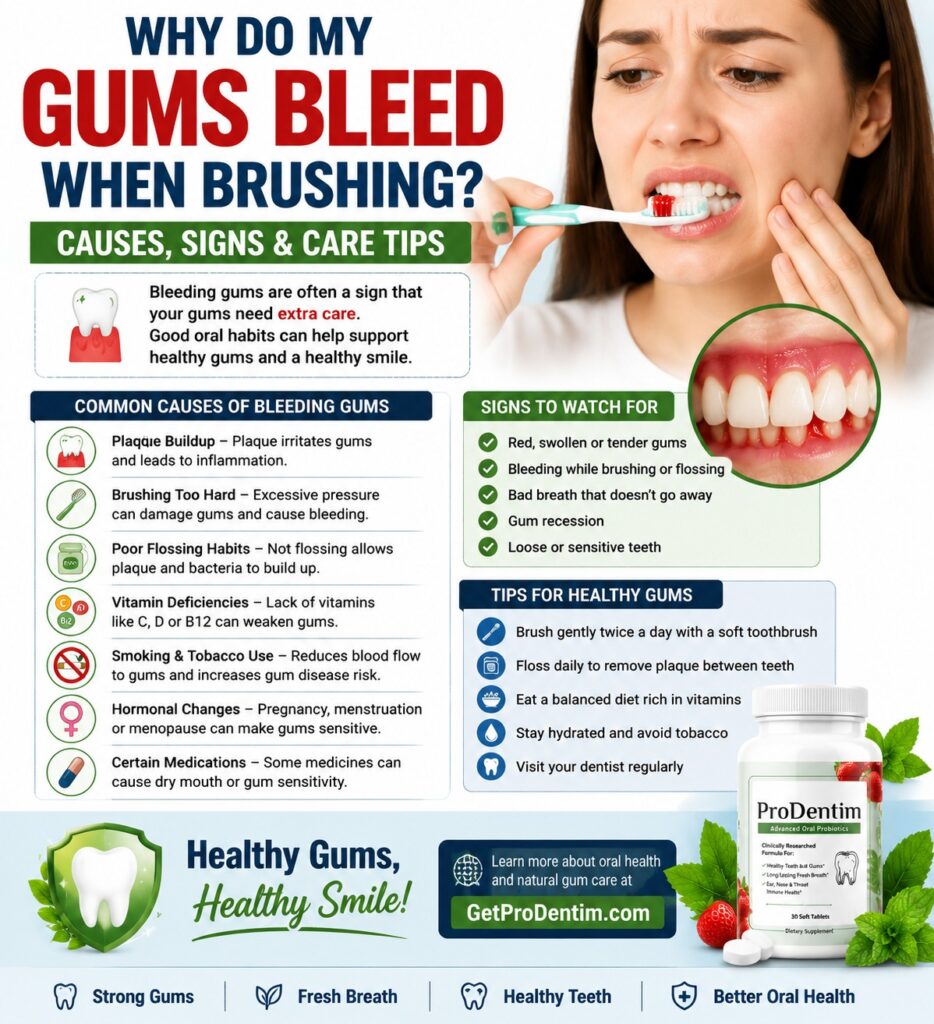
1. Gingivitis (Early Gum Disease)
The most common cause of gums bleeding while brushing is gingivitis, which is the earliest stage of gum disease. Gingivitis occurs when plaque, a sticky film of bacteria, builds up along the gum line.
The bacteria in plaque irritate the gums, making them red, swollen, and prone to bleeding. If left untreated, gingivitis can progress to a more serious condition called periodontitis, which may lead to tooth loss.
Common symptoms of gingivitis include:
- Red or puffy gums
- Tender gums
- Persistent bleeding gums
- Bad breath
- Gum sensitivity
Fortunately, gingivitis is reversible with proper oral care and regular dental cleanings.
2. Brushing Too Hard
Many people believe that brushing harder cleans the teeth better. However, aggressive brushing can damage the gum tissue and lead to bleeding from the gums.
Using a hard-bristled toothbrush or applying excessive pressure while brushing can irritate sensitive gum tissue. Over time, this may cause gum recession and increased sensitivity.
To prevent bleeding gums, dentists recommend:
- Using a soft-bristled toothbrush
- Brushing gently using circular motions
- Avoiding excessive pressure
- Replacing your toothbrush every three months
3. Poor Oral Hygiene
Inconsistent brushing and flossing allow plaque and bacteria to accumulate around the teeth and gums. This buildup can inflame the gums and cause bleeding gums.
Skipping your oral hygiene routine may not cause immediate problems, but over time it significantly increases the risk of gum disease.
A proper oral hygiene routine should include:
- Brushing twice daily
- Flossing once a day
- Cleaning the tongue
- Using an antibacterial mouthwash
- Visiting the dentist regularly
Maintaining these habits can greatly reduce the chances of developing bleeding gums.
4. Starting a New Flossing Routine
If you’ve recently started flossing after a long break, you may notice bleeding gums during the first few days. This happens because the gums are not accustomed to being cleaned between the teeth.
In most cases, the bleeding improves within a week as the gums become healthier and less inflamed.
However, if bleeding gums continue for more than two weeks, you should consult your dentist.
5. Vitamin Deficiencies
Certain nutritional deficiencies can contribute to bleeding gums. Vitamin C and Vitamin K play crucial roles in maintaining healthy gums and proper blood clotting.
Vitamin C Deficiency
Low levels of Vitamin C can weaken the gums and make them more susceptible to infection and bleeding.
Foods rich in Vitamin C include:
- Oranges
- Lemons
- Strawberries
- Bell peppers
- Broccoli
Vitamin K Deficiency
Vitamin K helps blood clot properly. A deficiency may increase the likelihood of bleeding gums.
Foods rich in Vitamin K include:
- Spinach
- Kale
- Cabbage
- Broccoli
- Green leafy vegetables
A balanced diet supports healthy gums and overall oral health.
6. Hormonal Changes
Hormonal fluctuations can make the gums more sensitive and increase the risk of bleeding gums.
This commonly occurs during:
- Pregnancy
- Puberty
- Menstruation
- Menopause
Pregnancy, in particular, can lead to a condition known as pregnancy gingivitis. Increased hormone levels make the gums react more strongly to plaque bacteria.
Pregnant women experiencing bleeding gums should pay extra attention to oral hygiene and schedule regular dental checkups.
7. Certain Medical Conditions
Sometimes, bleeding gums may indicate an underlying health issue.
Conditions associated with gum bleeding include:
- Diabetes
- Blood clotting disorders
- Leukemia
- Liver disease
- Immune system disorders
People with diabetes are especially prone to infections, including gum disease. If bleeding gums occur frequently without an obvious cause, a medical evaluation may be necessary.
8. Medications
Some medications can increase the risk of bleeding gums.
Examples include:
- Blood thinners
- Aspirin
- Certain anti-inflammatory drugs
- Some medications for high blood pressure
These medications may interfere with blood clotting, causing the gums to bleed more easily.
Never stop taking prescribed medication without consulting your healthcare provider.
How Can You Stop Bleeding Gums?
The good news is that most cases of bleeding gums can be treated and prevented with proper care.
Improve Your Brushing Technique
Brush gently for two minutes twice daily using a soft-bristled toothbrush. Gentle cleaning effectively removes plaque without damaging the gums.
Floss Every Day
Daily flossing removes plaque and food particles from areas that a toothbrush cannot reach. Consistent flossing helps reduce inflammation and prevents bleeding gums.
Use an Antibacterial Mouthwash
A dentist-recommended mouthwash can help reduce bacteria and soothe inflamed gum tissue.
Eat a Nutrient-Rich Diet
A healthy diet rich in vitamins and minerals strengthens your immune system and supports healthy gums.
Stay Hydrated
Drinking enough water helps wash away food debris and bacteria while promoting saliva production, which naturally protects the mouth.
Schedule Regular Dental Visits
Professional cleanings remove hardened plaque, known as tartar, that cannot be eliminated by brushing alone.
Regular dental visits can identify the cause of bleeding gums before serious complications develop.
When Should You See a Dentist?
Occasional bleeding may not always be a cause for concern. However, you should seek professional help if:
- Your bleeding gums persist for more than two weeks
- Your gums are swollen or painful
- You experience loose teeth
- You have persistent bad breath
- Your gums are receding
- Bleeding becomes severe or frequent
Early treatment can prevent gum disease from progressing and help preserve your oral health.
Final Thoughts
Seeing blood while brushing can be alarming, but bleeding gums are often an early warning sign that should not be ignored. In many cases, the issue results from plaque buildup, poor brushing habits, vitamin deficiencies, or gum disease.
The good news is that most causes of bleeding gums are treatable with good oral hygiene practices, proper nutrition, and regular dental care. Paying attention to your gums today can prevent more serious dental problems in the future.
Remember, healthy gums should not bleed. If your bleeding gums continue despite improving your oral care routine, it is best to consult a dental professional and determine the underlying cause.