Dry mouth is a common condition that affects millions of people worldwide. While it may seem like a minor inconvenience, a lack of saliva can increase the risk of tooth decay, bad breath, gum disease, and difficulty eating or speaking. Understanding dry mouth causes and remedies is the first step toward protecting your oral health.
Saliva plays a vital role in keeping your mouth healthy. It washes away food particles, neutralizes harmful acids, and helps prevent bacteria from damaging your teeth and gums. When your mouth doesn’t produce enough saliva, everyday activities such as chewing, swallowing, or even talking can become uncomfortable.
Fortunately, many cases of dry mouth can be improved through simple lifestyle changes, proper hydration, and good oral hygiene. In this complete guide, you’ll learn the most common dry mouth causes and remedies, symptoms to watch for, effective home treatments, prevention tips, and when it’s time to see a dentist. According to Mayo Clinic, persistent dry mouth should be evaluated if it continues for an extended period or affects your quality of life.
Table of Contents
What Is Dry Mouth?
Dry mouth, medically known as xerostomia, occurs when your salivary glands don’t produce enough Dry mouth, also known as xerostomia, occurs when the salivary glands don’t produce enough saliva to keep your mouth moist.
Many people experience temporary dry mouth after exercising, feeling stressed, or becoming dehydrated. However, persistent dry mouth may indicate an underlying health condition or be caused by certain medications.
Since dry mouth can increase the risk of tooth decay, you may also want to read our guide on How to Prevent Cavities Naturally.
Saliva is much more important than many people realize. It helps:
- Wash away food particles
- Neutralize harmful acids
- Protect tooth enamel
- Support healthy gums
- Aid digestion
- Reduce harmful bacteria
- Keep your mouth comfortable throughout the day
Without enough saliva, your mouth becomes more vulnerable to bacteria, plaque buildup, and cavities. The National Institute of Dental and Craniofacial Research (NIDCR) explains that dry mouth, also known as xerostomia, can affect oral health and increase the risk of dental problems. Learning about dry mouth causes and remedies can help you choose better oral care habits and reduce discomfort caused by low saliva production.
Why Saliva Is Important for Oral Health
Saliva is often called your mouth’s natural defense system.
Healthy saliva helps protect your teeth by continuously rinsing away food debris while also supplying minerals that support tooth enamel.
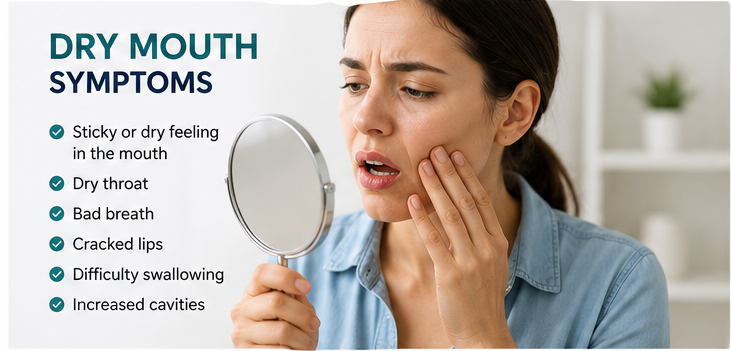
Without adequate saliva production, you may notice:
- Sticky feeling in the mouth
- Dry throat
- Difficulty swallowing
- Cracked lips
- Bad breath
- Increased plaque buildup
- Higher cavity risk
This is why understanding dry mouth causes and remedies is essential for maintaining long-term oral health.
Common Dry Mouth Causes
Dry mouth can occur for many different reasons. Sometimes it’s temporary, while in other cases it may require medical attention.
1. Dehydration
One of the most common dry mouth causes is dehydration.
Not drinking enough water, excessive sweating, fever, vomiting, or diarrhea can reduce saliva production.
Simple dehydration is often one of the easiest causes to improve by increasing fluid intake.
2. Medications
Hundreds of prescription and over-the-counter medications list dry mouth as a side effect.
Examples include:
- Antihistamines
- Antidepressants
- Blood pressure medications
- Pain relievers
- Muscle relaxants
Never stop taking prescribed medication without consulting your healthcare provider.
3. Diabetes
People with diabetes may experience dry mouth due to elevated blood sugar levels or certain diabetes medications.
Persistent dry mouth should always be discussed with your healthcare provider.
4. Stress and Anxiety
Emotional stress can temporarily reduce saliva production.
Many people notice dry mouth before public speaking, interviews, or stressful situations.
Managing stress may help reduce symptoms.
5. Mouth Breathing
Breathing through your mouth while sleeping or during the day can cause your mouth to become dry.
This is common among people with:
- Nasal congestion
- Allergies
- Sleep apnea
6. Smoking and Tobacco Use
Smoking affects saliva production and irritates oral tissues.
Tobacco users are generally more likely to experience persistent dry mouth and bad breath.
7. Aging
Growing older doesn’t directly cause dry mouth, but older adults often take medications that reduce saliva production.
Regular dental care becomes increasingly important with age.
Identifying the main dry mouth causes and remedies can make it easier to manage symptoms and protect your teeth from future problems.
Symptoms of Dry Mouth
The symptoms of dry mouth can vary from mild discomfort to persistent oral health problems. Some people experience occasional dryness, while others deal with it every day.
Common symptoms include:
- A sticky or dry feeling inside the mouth
- Frequent thirst
- Difficulty chewing or swallowing food
- Dry or sore throat
- Cracked lips
- Bad breath (halitosis)
- Hoarseness
- Burning sensation on the tongue
- Dry, rough tongue
- Changes in taste
- Difficulty wearing dentures
- Increased tooth decay and cavities
If these symptoms continue for several weeks, consult your dentist or healthcare provider to determine the underlying cause. Recognizing these symptoms early helps you understand your condition and find suitable dry mouth causes and remedies for better comfort.
Best Dry Mouth Remedies
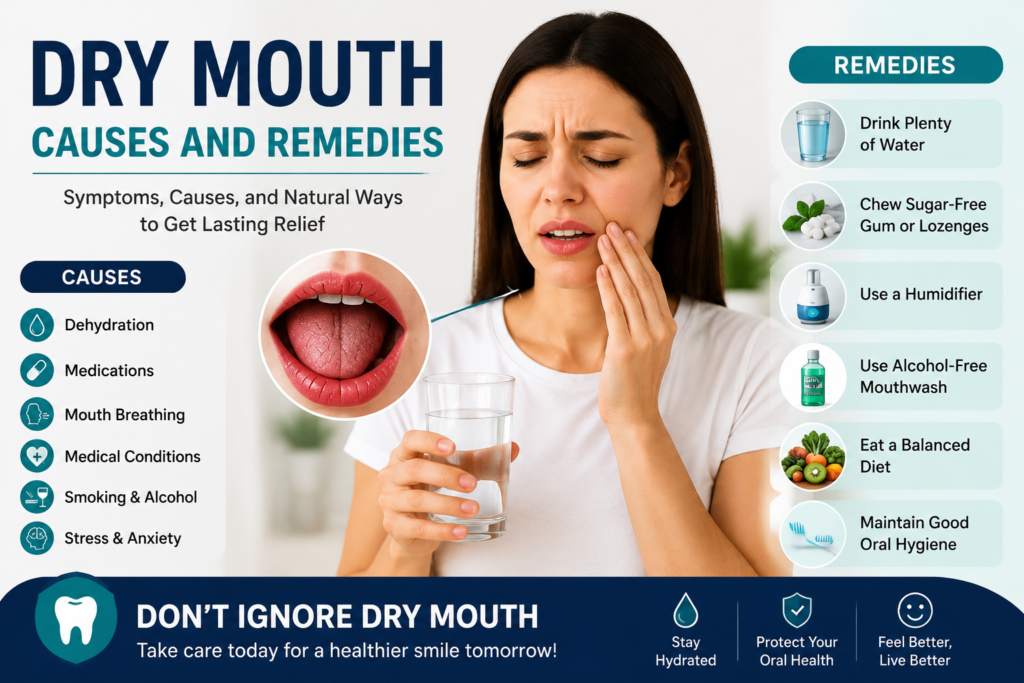
The right dry mouth causes and remedies approach depends on what is causing reduced saliva production.
Fortunately, there are many effective dry mouth causes and remedies that may help improve saliva production and keep your mouth comfortable.
Proper nutrition also plays an important role in oral health. Learn more in our guide on Best Vitamins for Teeth and Gums.
💧 Recommended Product for Dry Mouth
ACT Dry Mouth Lozenges with Xylitol
If you frequently experience dry mouth, ACT Dry Mouth Lozenges with Xylitol may help provide temporary relief by moisturizing your mouth and stimulating saliva production. The sugar-free formula is convenient for use at home, work, or while traveling.
Benefits:
- Helps relieve dry mouth discomfort
- Contains xylitol
- Sugar-free formula
- Freshens breath
- Easy to carry for daily use
Disclosure:
As an Amazon Associate, we earn from qualifying purchases.
1. Drink More Water
Staying hydrated is one of the simplest and most effective ways to relieve dry mouth.
Tips:
- Sip water throughout the day.
- Carry a reusable water bottle.
- Drink extra water during hot weather or exercise.
2. Chew Sugar-Free Gum
Chewing sugar-free gum, especially one containing xylitol, may help stimulate saliva production naturally.
Xylitol also supports oral hygiene by reducing harmful bacteria associated with tooth decay.
3. Use Alcohol-Free Mouthwash
Many regular mouthwashes contain alcohol, which can worsen dry mouth.
Choose an alcohol-free mouthwash specifically designed for dry mouth relief whenever possible.
4. Limit Caffeine and Alcohol
Coffee, energy drinks, alcohol, and some soft drinks may contribute to dehydration.
Reducing these beverages may help improve dry mouth symptoms.
5. Avoid Smoking
Smoking and tobacco products reduce saliva production and irritate oral tissues.
Quitting smoking may improve both your oral health and overall well-being.
6. Use a Humidifier at Night
A humidifier adds moisture to the air, which may reduce mouth dryness while sleeping, especially if you breathe through your mouth.
7. Maintain Excellent Oral Hygiene
Brushing twice daily, flossing, and regular dental checkups help reduce plaque buildup and lower the risk of cavities caused by dry mouth.
A consistent oral care routine is one of the most effective long-term dry mouth remedies. The American Dental Association (ADA) recommends maintaining good oral hygiene and regular dental checkups as part of a healthy oral care routine.
Choosing supportive oral care products can be one part of managing dry mouth causes and remedies effectively.
Waterpik Water Flosser
Keeping your mouth clean is especially important when dealing with dry mouth. A Waterpik Water Flosser helps remove food particles and plaque from between teeth and along the gumline, areas that a regular toothbrush may not reach easily.
It can be a convenient option for people who want an easier alternative to traditional flossing while maintaining a better oral care routine.
Benefits:
- Helps clean between teeth
- Supports healthier gums
- Removes food debris
- Easy alternative to string floss
- Useful for daily oral hygiene
Disclosure:
As an Amazon Associate, we earn from qualifying purchases.
Foods That May Help Dry Mouth
Certain foods can help keep your mouth comfortable and support saliva production.
Examples include:
- Cucumbers
- Watermelon
- Apples
- Celery
- Yogurt
- Leafy green vegetables
- Sugar-free yogurt
- Broth-based soups
These foods contain water or require chewing, which may naturally stimulate saliva.
Foods and Drinks to Limit
Some foods may worsen dry mouth symptoms.
Try limiting:
- Sugary candies
- Sticky sweets
- Salty snacks
- Alcohol
- Coffee
- Energy drinks
- Sugary soft drinks
- Very spicy foods
Choosing healthier alternatives can support better oral comfort. Along with these food choices, following proper dry mouth causes and remedies strategies can support better oral health.
Can Dry Mouth Cause Cavities?
Yes.
Saliva helps protect your teeth by washing away food particles and neutralizing acids produced by bacteria.
When saliva production decreases, bacteria can multiply more easily, increasing the risk of:
- Tooth decay
- Gum disease
- Plaque buildup
- Bad breath
- Oral infections
This is why managing dry mouth causes and remedies is an important part of maintaining good oral health.
Frequently Asked Questions (FAQs)
Is dry mouth a serious condition?
Occasional dry mouth is usually not serious and often improves after drinking water or addressing temporary causes such as dehydration. However, persistent dry mouth should not be ignored because it may increase the risk of cavities, gum disease, bad breath, and oral infections. If your symptoms continue for several weeks, it’s a good idea to consult a dentist or healthcare provider.
Can drinking more water cure dry mouth?
Drinking water can help relieve temporary dry mouth caused by dehydration and keep your mouth comfortable. However, if dry mouth is related to medications, certain medical conditions, or reduced saliva production, water alone may not completely solve the problem. Identifying the underlying cause is important.
Which vitamins may help with dry mouth?
Some nutritional deficiencies may contribute to oral discomfort in certain individuals. Vitamins such as Vitamin B Complex, Vitamin A, and Vitamin D play important roles in maintaining healthy oral tissues. However, supplements should only be taken after consulting a healthcare professional if a deficiency is suspected.
Can stress cause dry mouth?
Yes. Stress and anxiety can temporarily reduce saliva production in some people. Many individuals notice a dry mouth before public speaking, interviews, or stressful situations. Managing stress through relaxation techniques, regular exercise, and adequate sleep may help reduce these symptoms.
Does dry mouth increase the risk of cavities?
Yes. Saliva helps wash away food particles and neutralize acids produced by bacteria. Without enough saliva, plaque can build up more easily, increasing the risk of tooth decay and gum problems. Maintaining good oral hygiene becomes especially important for people experiencing dry mouth.
What foods should I avoid if I have dry mouth?
If you frequently experience dry mouth, try limiting:
- Sugary snacks
- Sticky candies
- Salty foods
- Alcohol
- Excess caffeine
- Sugary soft drinks
- Tobacco products
Instead, choose water-rich foods and stay well hydrated throughout the day.
If you want to improve your overall oral health naturally, you may also find these guides helpful:
• Best Supplements for Healthy Gums
• Can ProDentim Help Receding Gums?
Final Thoughts
Understanding dry mouth causes and remedies can help you take better care of your oral health before small problems become bigger ones. While occasional dry mouth is common, persistent symptoms deserve attention because saliva plays a vital role in protecting your teeth, gums, and overall comfort.
Simple daily habits such as drinking enough water, maintaining good oral hygiene, reducing sugary foods, avoiding tobacco, and visiting your dentist regularly can make a significant difference. If your dry mouth continues despite lifestyle changes, speak with a healthcare professional to identify any underlying causes and discuss appropriate treatment options.
A healthy mouth starts with consistent daily care. By recognizing the common dry mouth causes and remedies and making informed choices, you can support healthier teeth, fresher breath, and a more comfortable smile for years to come. A better understanding of dry mouth causes and remedies allows you to take proactive steps for a healthier and more comfortable mouth.
Disclaimer
This article is intended for educational purposes only and should not replace professional medical or dental advice. Always consult a qualified dentist or healthcare provider regarding persistent dry mouth or other oral health concerns. Following the right dry mouth causes and remedies approach can help you maintain better oral comfort and support long-term oral health.