Healthy gums are the foundation of a healthy smile. They protect your teeth, support the jawbone, and help prevent harmful bacteria from entering deeper tissues. However, gum problems often develop gradually, making it easy to ignore the early warning signs.
Recognizing the signs of unhealthy gums early can help you prevent more serious oral health issues such as gingivitis, periodontitis, tooth loss, and persistent bad breath. The earlier you take action, the easier it is to protect your teeth and gums.
In this guide, we’ll explain the most common signs of unhealthy gums, what causes them, and the steps you can take to improve your oral health naturally. Learning the Signs of Unhealthy Gums early can help you protect your smile and avoid more serious dental problems.
Table of Contents
What Do Healthy Gums Look Like?
Healthy gums are firm, light pink (though natural color varies from person to person), and fit snugly around your teeth. They should not bleed during brushing or flossing, and they should feel comfortable without swelling or tenderness.
Characteristics of healthy gums include:
- Firm and resilient texture
- Pink or naturally pigmented color
- No bleeding while brushing or flossing
- Fresh breath
- Teeth that feel stable and secure
- No pain or swelling
Keeping your gums healthy is just as important as protecting your teeth.
What Are Unhealthy Gums?
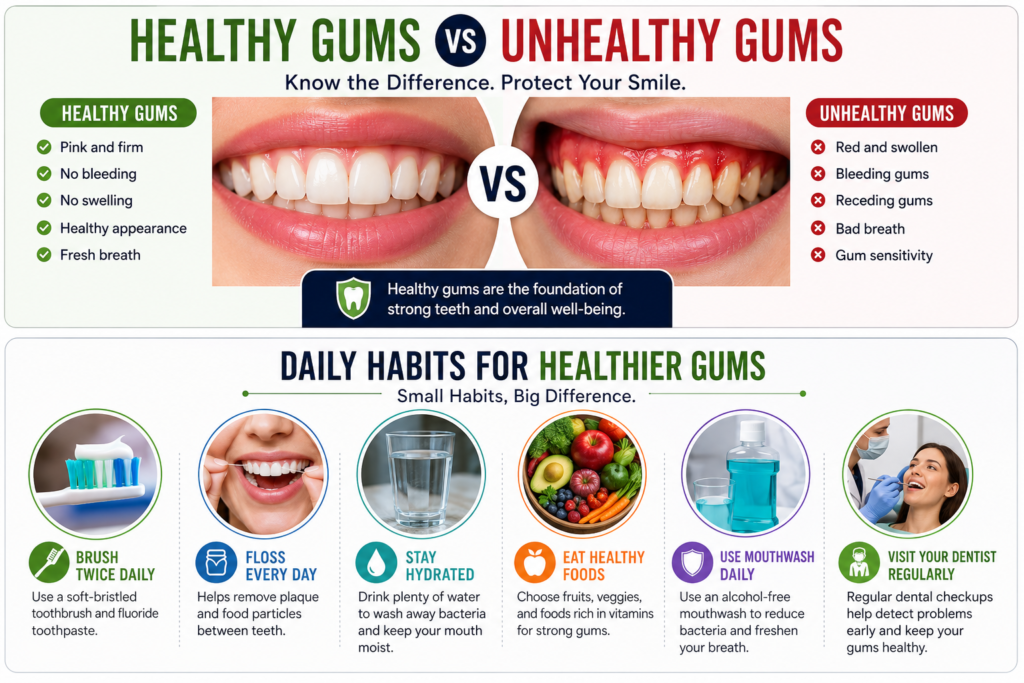
Unhealthy gums develop when plaque and bacteria build up around the gumline. Over time, this can irritate the gums, causing inflammation and infection.
If left untreated, mild gum inflammation (gingivitis) can progress into periodontal disease, a more serious condition that damages the tissues and bone supporting your teeth.
Understanding the signs of unhealthy gums allows you to seek treatment before permanent damage occurs.
What Causes Gum Problems?
Several everyday habits and health conditions can contribute to unhealthy gums.
Common causes include:
- Poor brushing and flossing habits
- Plaque and tartar buildup
- Smoking or tobacco use
- Diabetes
- Dry mouth
- Hormonal changes
- Poor nutrition
- Certain medications
- Stress
- Irregular dental checkups
Many of these risk factors can be reduced by maintaining a consistent oral hygiene routine. One of the most effective ways to protect your gums is by reducing plaque buildup. Learn more in our complete guide on Natural Ways to Remove Plaque.
Why Gum Health Matters
Your gums do much more than hold your teeth in place. They act as a protective barrier against bacteria and help support the overall health of your mouth.
Ignoring the signs of unhealthy gums can increase the risk of:
- Gingivitis
- Periodontitis
- Tooth loss
- Persistent bad breath
- Pain while chewing
- Receding gums
- Increased tooth sensitivity
Healthy gums also contribute to your overall well-being, as poor oral health has been linked to certain chronic health conditions. The Centers for Disease Control and Prevention (CDC) recommends maintaining good oral hygiene to reduce the risk of gum disease and tooth loss.
Recommended Oral Care Products
Along with healthy daily habits, the right oral care tools can make plaque removal more effective. While no product can replace regular brushing and flossing, these tools may help support a cleaner mouth and healthier gums.
⭐ Philips Sonicare 4200 Series Electric Toothbrush
Why We Recommend It
Rechargeable design
Removes plaque more effectively than many manual toothbrushes
Sonic cleaning technology
Built-in pressure sensor
Gentle on gums
💧 Waterpik Cordless Pulse 3100 Water Flosser
Why We Recommend It
Easy daily use
Helps clean between teeth
Removes food particles around the gumline
Great for braces and implants
Portable & rechargeable
Disclosure:
As an Amazon Associate, we earn from qualifying purchases.
Early Warning Signs to Watch For
Many gum problems begin with mild symptoms that people often overlook.
Early warning signs include:
- Bleeding while brushing
- Red or swollen gums
- Tenderness around the gumline
- Persistent bad breath
- Mild gum recession
Recognizing these symptoms early gives you the best chance to restore your gum health before the condition becomes more serious. Understanding the Signs of Unhealthy Gums early allows you to improve your oral hygiene before minor problems become serious dental conditions.
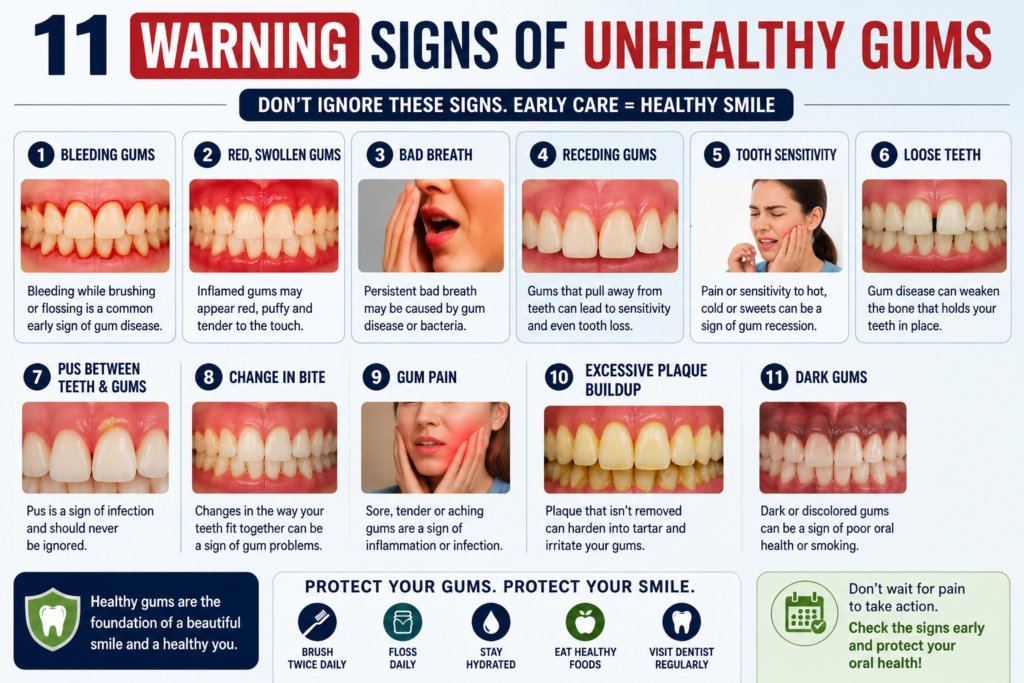
11 Warning Signs of Unhealthy Gums
Healthy gums should feel firm, look pink (or naturally pigmented), and never bleed during brushing or flossing. If you notice any of the following signs of unhealthy gums, it’s important to improve your oral care routine and consult a dentist if symptoms persist.
1. Bleeding While Brushing or Flossing
One of the earliest signs of unhealthy gums is bleeding during brushing or flossing. Healthy gums should not bleed easily.
Occasional bleeding may happen if you’ve just started flossing, but frequent bleeding can indicate gum inflammation caused by plaque buildup.
What you should do:
- Brush gently twice a day.
- Floss daily.
- Schedule a dental checkup if bleeding continues.
2. Red or Swollen Gums
Healthy gums are usually firm and light pink. If your gums appear bright red, swollen, or puffy, it may be a sign of gingivitis—the earliest stage of gum disease.
Reducing plaque buildup can often help improve mild gum inflammation.
3. Persistent Bad Breath
Bad breath that doesn’t improve after brushing may indicate bacteria trapped beneath the gumline.
Plaque and food debris allow bacteria to multiply, leading to unpleasant breath and irritated gums.
Maintaining good oral hygiene and cleaning your tongue daily can help reduce odor-causing bacteria.
4. Receding Gums
If your teeth appear longer than they used to, your gums may be receding.
Gum recession exposes more of the tooth surface and can increase the risk of tooth sensitivity and decay.
Early treatment can help slow further recession.
5. Sensitive Teeth
Sensitivity to hot, cold, or sweet foods may develop when gum tissue pulls away from the teeth.
Exposed tooth roots are more vulnerable to temperature changes and discomfort.
Using a soft-bristled toothbrush and avoiding aggressive brushing can help protect your gums.
6. Pain or Tenderness Around the Gums
Healthy gums should not feel sore.
Pain, tenderness, or discomfort while eating or brushing may indicate irritation or infection.
Persistent pain should always be evaluated by a dental professional.
7. Loose Teeth
Adult teeth should remain stable.
If a tooth feels loose or shifts while chewing, it may be a sign that gum disease has affected the supporting tissues and bone.
Prompt dental care is essential to prevent further damage.
8. Pus Between the Teeth and Gums
Pus around the gumline is a warning sign of infection.
This symptom often requires immediate dental evaluation because it may indicate an advanced stage of gum disease.
9. Changes in the Way Your Teeth Fit Together
If your bite suddenly feels different or your teeth no longer fit together comfortably, gum disease may have weakened the supporting structures around your teeth.
This symptom should never be ignored.
10. Chronic Plaque and Tartar Buildup
Plaque that isn’t removed daily hardens into tartar, creating an environment where bacteria continue to irritate the gums.
Professional dental cleanings are necessary to remove tartar safely.
11. Frequent Gum Irritation
If your gums regularly feel itchy, irritated, or inflamed, it may be another one of the signs of unhealthy gums.
Ignoring these early symptoms can allow gum disease to progress over time.
Who Is Most at Risk?
Some people are more likely to develop gum problems than others.
Risk factors include:
- Smoking or tobacco use
- Diabetes
- Poor oral hygiene
- Dry mouth
- High-sugar diet
- Hormonal changes
- Certain medications
- Family history of gum disease
Understanding these risk factors can help you take preventive steps before serious problems develop. A lack of saliva can increase plaque buildup and gum irritation. Read our article on Dry Mouth Causes and Remedies to learn how proper hydration supports better oral health.
How to Keep Your Gums Healthy
The best way to prevent unhealthy gums is through consistent daily care.
Follow these simple habits:
- Brush your teeth twice a day.
- Floss every day.
- Stay hydrated.
- Limit sugary foods and drinks.
- Use an alcohol-free mouthwash.
- Visit your dentist every six months.
These habits can significantly reduce plaque buildup and support healthier gums over time. Healthy gums and healthy teeth go hand in hand. You can also read our guide on How to Prevent Cavities Naturally to protect your smile from tooth decay.
If you’re also exploring oral probiotics as part of your oral-care routine, you can read our ProDentim Reviews 2026 for a detailed look at its ingredients, potential benefits, price, and limitations.
Recommended Oral Care Products
While maintaining a good oral hygiene routine is the foundation of healthy gums, using the right oral care tools can make your daily routine more effective. The following products may help support cleaner teeth and healthier gums when used consistently.
⭐ Philips Sonicare 4200 Electric Toothbrush
An electric toothbrush can help remove plaque more effectively than many manual toothbrushes while being gentle on your gums.
Why We Recommend It
- Removes plaque efficiently
- Built-in pressure sensor
- Gentle sonic cleaning technology
- Helps support healthier gums
- Rechargeable and easy to use
👉 Check Price on Amazon
💧 Waterpik Cordless Pulse 3100 Water Flosser
A water flosser helps clean between teeth and along the gumline where brushing alone may not reach.
It is especially useful for people with:
- Braces
- Crowns
- Bridges
- Dental implants
- Sensitive gums
Benefits
- Helps remove food particles
- Supports healthier gums
- Cleans hard-to-reach areas
- Easy portable design
👉 Check Price on Amazon
Disclosure: As an Amazon Associate, we earn from qualifying purchases.
Frequently Asked Questions
What are the first signs of unhealthy gums?
The earliest signs of unhealthy gums include bleeding while brushing, swollen gums, redness, persistent bad breath, and tenderness around the gumline.
Can unhealthy gums become healthy again?
In many cases, early gum problems such as gingivitis can improve with proper brushing, flossing, professional dental cleanings, and good daily oral hygiene. More advanced gum disease may require professional treatment.
Why do my gums bleed when I brush?
Bleeding gums are commonly caused by plaque buildup that irritates the gum tissue. Brushing gently, flossing daily, and maintaining regular dental visits can often help reduce inflammation.
What causes gum disease?
Common causes include:
- Poor oral hygiene
- Plaque buildup
- Smoking
- Diabetes
- Dry mouth
- Hormonal changes
- Poor nutrition
How can I improve gum health naturally?
You can support healthier gums by:
- Brushing twice daily
- Flossing every day
- Drinking plenty of water
- Eating a balanced diet
- Avoiding tobacco products
- Visiting your dentist regularly
These healthy habits can help reduce plaque and improve overall oral health. According to the American Dental Association, brushing twice daily and flossing every day are essential habits for maintaining healthy gums. If you notice several Signs of Unhealthy Gums at the same time, don’t delay improving your oral hygiene routine or seeking professional dental advice.
Final Thoughts
Healthy gums are essential for maintaining strong teeth and a confident smile. Many people ignore the early signs of unhealthy gums, but recognizing symptoms such as bleeding, swelling, bad breath, or gum recession can help you take action before more serious dental problems develop.
By following a consistent oral care routine, eating a balanced diet, and scheduling regular dental checkups, you can support healthier gums and reduce the risk of gum disease.
If you notice persistent gum problems or worsening symptoms, consult a qualified dentist for a professional evaluation and personalized treatment plan. The National Institute of Dental and Craniofacial Research provides evidence-based information on gum disease prevention and oral health. Never ignore the Signs of Unhealthy Gums, because early treatment and good daily habits can help protect your teeth, gums, and overall oral health. Regular brushing, flossing, and dental checkups can help prevent many Signs of Unhealthy Gums before they become severe.
Disclaimer
This article is intended for educational purposes only and should not be considered medical or dental advice. Always consult a licensed dentist or healthcare professional for diagnosis and treatment of oral health conditions.